God I love crocs and their entire family tree so much. These are animals that have remained virtually the same for millions of years-pretty much as close to “perfect” as you can get in nature-and this highly optimized body plan is just. A fat sausage with a mouth at one end and chubby baby arms.
what if i told you that a lot of “Americanized” versions of foods were actually the product of immigrant experiences and are not “bastardized versions”
That’s actually fascinating, does anyone have any examples?
I took an entire class about Italian American immigrant cuisine and how it’s a product of their unique immigrant experience. The TL;DR is that many Italian immigrants came from the south (the poor) part of Italy, and were used to a mostly vegetable-based diet. However, when they came to the US they found foods that rich northern Italians were depicted as eating, such as sugar, coffee, wine, and meat, available for prices they could afford for the very first time. This is why Italian Americans were the first to combine meatballs with pasta, and why a lot of Italian American food is sugary and/or fattening. Italian American cuisine is a celebration of Italian immigrants’ newfound access to foods they hadn’t been able to access back home.
(Source: Cinotto, Simone. The Italian American Table: Food, Family, and
Community in New York City. Chicago: U of Illinois, 2013. Print.)
that corned beef and cabbage thing you hear abou irish americans is actually from a similar situation but because they weren’t allowed to eat that stuff due to that artificial famine
❤ FOOD HISTORY ❤
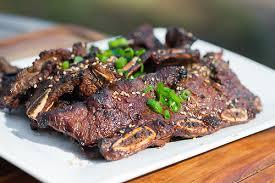
Everyone knows Korean barbecue, right? It looks like this, right?
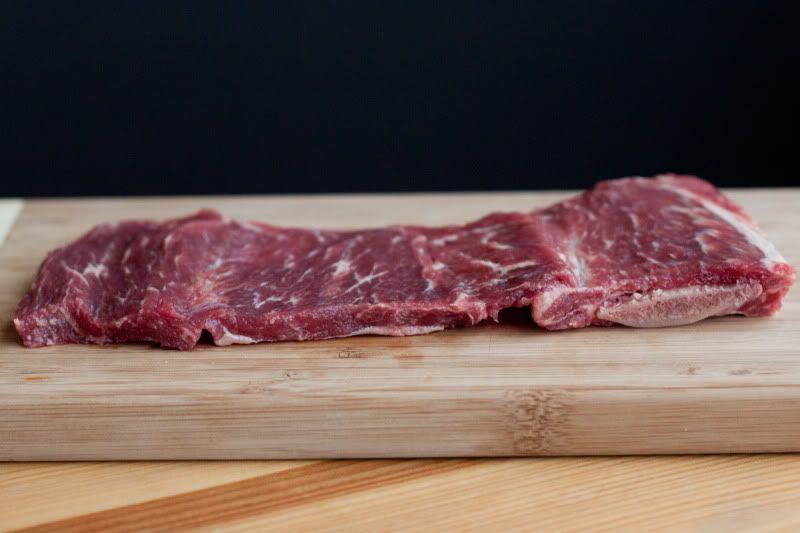
Well, this is called a “flanken cut” and was actually unheard of in traditional Korean cooking. In traditional galbi, the bone is cut about two inches long, separated into individual bones, and the meat is butterflied into a long, thin ribbon, like this:
In fact, the style of galbi with the bones cut short across the length is called “LA Galbi,” as in “Los Angeles-style.” So the “traditional Korean barbecue” is actually a Korean-American dish.
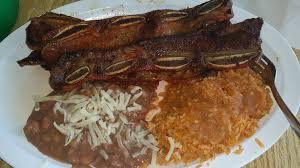
Now, here’s where things get interesting. You see, flanken-cut ribs aren’t actually all that popular in American cooking either. Where they are often used however, is in Mexican cooking, for tablitas.
So you have to imagine these Korean-American immigrants in 1970s Los Angeles getting a hankering for their traditional barbecue. Perhaps they end up going to a corner butcher shop to buy short ribs. Perhaps that butcher shop is owned by a Mexican family. Perhaps they end up buying flanken-cut short ribs for tablitas because that’s what’s available. Perhaps they get slightly weirded out by the way the bones are cut so short, but give it a chance anyway. “Holy crap this is delicious, and you can use the bones as a little handle too, so now galbi is finger food!” Soon, they actually come to prefer the flanken cut over the traditional cut: it’s easier to cook, easier to serve, and delicious, to boot!
Time goes on, Asian fusion becomes popular, and suddenly the flanken cut short rib becomes better known as “Korean BBQ,” when it actually originated as a Korean-Mexican fusion dish!
I don’t know that it actually happened this way, but I like to think it did.
Corned beef and cabbage as we know it today? That came to the Irish immigrants via their Jewish neighbors at kosher delis.
The Irish immigrants almost solely bought their meat from kosher butchers. And what we think of today as Irish corned beef is actually Jewish corned beef thrown into a pot with cabbage and potatoes. The Jewish population in New York City at the time were relatively new immigrants from Eastern and Central Europe. The corned beef they made was from brisket, a kosher cut of meat from the front of the cow. Since brisket is a tougher cut, the salting and cooking processes transformed the meat into the extremely tender, flavorful corned beef we know of today.
The Irish may have been drawn to settling near Jewish neighborhoods and shopping at Jewish butchers because their cultures had many parallels. Both groups were scattered across the globe to escape oppression, had a sacred lost homeland, discriminated against in the US, and had a love for the arts. There was an understanding between the two groups, which was a comfort to the newly arriving immigrants. This relationship can be seen in Irish, Irish-American and Jewish-American folklore. It is not a coincidence that James Joyce made the main character of his masterpiece Ulysses, Leopold Bloom, a man born to Jewish and Irish parents.
Hey, finally a version of D.Va that matches up to the one that goes through my head every time I play her…
For those of you that want to know, this is from the game Agents of Mayhem, that character over there is called AISHA (I believe) and this is indeed Charlet Chung, D.Va’s VA, doing those lines.
Hey, finally a version of D.Va that matches up to the one that goes through my head every time I play her…
For those of you that want to know, this is from the game Agents of Mayhem, that character over there is called AISHA (I believe) and this is indeed Charlet Chung, D.Va’s VA, doing those lines.
The other thing about the word “queer” is that almost everyone I’ve seen opposed to it have been cis, binary gays and lesbians. Not wanting it applied to yourself is fine, but I think people underestimate the appeal of vague, inclusive terminology when they already have language to easily and non-invasively describe themselves.
Saying “I’m gay/lesbian/bi” is pretty simple. Just about everyone knows what you mean, and you quickly establish yourself as a member of a community. Saying “I’m a trans nonbinary bi woman who’s celibate due to dysphoria and possibly on the ace spectrum”… not so much. You’re lucky to find anyone who understands even half of that, and explaining it requires revealing a ton of personal information. The appeal of “queer” is being able to identify yourself without profiling yourself. It’s welcoming and functional terminology to those who do not have the luxury of simplified language and occupy complicated identities. *That’s* why people use it – there are currently not alternatives to express the same sentiment.
It’s not people “oppressing themselves” or naively and irresponsibly using a word with loaded history. It’s easy to dismiss it as bad or unnecessary if you already have the luxury of language to comfortably describe yourself.
There’s another dimension that always, always gets overlooked in contemporary discussions about the word “queer:” class. The last paragraph here reminds me of a old quote: “rich lesbians are ‘sapphic,’ poor lesbians are ‘dykes’.”
The reclaiming of the slur “queer” was an intensely political process, and people who came up during the 90s, or who came up mostly around people who did so, were divided on class and political lines on questions of assimilation into straight capitalist society.
Bourgeois gays and lesbians already had “the luxury of language” to describe themselves – normalized through struggle, thanks to groups like the Gay Liberation Front.
Everyone else, from poor gays and lesbians to bi and trans people and so on, had no such language. These people were the ones for whom social/economic assimilation was not an option.
The only language left, the only word which united this particular underclass, was “queer.” “Queer” came to mean an opposition to assimilation – to straight culture, capitalism, patriarchy, and to upper class gays and lesbians who wanted to throw the rest of us under the bus for a seat at that table – and a solidarity among those marginalized for their sexuality/gender id/presentation.
(Groups which reclaimed “queer,” like Queer Patrol (armed against homophobic violence), (Queers) Bash Back! (action and theory against fascism, homophobia, and transphobia), and Queerbomb (in response to corporate/state co-optation of mainstream Gay Pride), were “ultraleft,” working-class, anti-capitalist, and functioned around solidarity and direct action.)
The contemporary discourse around “queer” as a reclaimed-or-not slur both ignores and reproduces this history. The most marginalized among us, as OP notes, need this language. The ones who have problems with it are, generally, among those who have language – or “community,” or social/economic/political support – of their own.