He made it with filmmaker and BLM activist Sol Guy and you wouldn’t know from the title, but it’s actually a short film, not a documentary, about Darren Wilson being a fucking liar.
Tumblr completely erasing the work of a Black activist/artist while simultaneously finding ways to slander an LGBTQ Jewish person at the same time due to literally not bothering to find out what the film was about in the first place? I’m shocked.
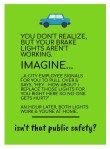
These are the solutions we need to policing right now.
Remember: the problem cannot be solved by technocratic solutions (i.e. body cams, further trainings, etc.)
The problem is policing itself.
This is the sort of shit I am talking about when I say we need to only talk about getting rid of police but also about what sort of actual safety could replace it.
And no, it is not enough for this to exist ‘next to the police’. The harm is in the fact that circumstances of personal and interpersonal harm are viewed through the lens of law and punishment.
The moment we take the concept of laws & punishment completely off the table and start thinking in needs and how to provide them, we become capable of seeing what is needed to achieve actual safety.
OK. Am I being completely dense? Because if you live in a place where *none of those public safety services* are available as a matter of course and as a first resource, and only the police are there to deal with those incidents, then you must be very remote or very underfunded. These are all pretty basic local health, safety, welfare and community services that ideally should be included by a local authority along with hundreds of others. Certainly, a protective or investigative policing role seems more appropriate to deal with whatever communities deem to be their criminal activities (which I’d suggest often cover things like violence, theft, physical damage, unlawful sex etc). But it does seem like a heck of a weird twist where ‘you and your mates need somewhere to sleep it off’ and ‘trained activists disarm gunmen’ are happening in the same place! I don’t think they would be that immediately connected, but they should certainly be networked.
I think you are missing the point.
First off, the sort of help described above not available at a moments notice, and when it is, it often comes with a health care bill that creates a complete new problem, or with the threat of violence such as psychiatric institutionalization. Local help is even more unlikely, as most people don’t have basic knowledge on psychological first aid or de-escalation and don’t feel like it’s their responsibility to step in. These resources definitely aren’t commonly available.
But much more importantly, people call the cops in all the situations described above and when they do, these things are no longer handled as situations where there is a need for care, they are handled as potential ‘criminal activities’ and the response is policing.
The basic nature of policing it that it takes a problem and re-frames it as ‘criminal activity’. The potential to address the harm and resolve the problem is replaced with control and punishment.
The broken break light example is super explicit about this. When you view a broken break light as a rule being broken, the answer is to give the driver a fine. But when you view it as a problem it is clear that all police does is give a driver with a problem (a broken light) an extra problem (fine). They’ve effectively made their situation worse and not solved anything. Which is exactly what policing does all the time.
When we re-frame things back, take off the ‘criminal activities‘ label and look at problems as being best addressed with non-coercive intervention, care, communication and a genuine look at the needs of everyone involved, we get back to solving problems instead of punishing.
That’s transformative justice instead of punitive justice.
I’ve been playing a fair amount of Hitman 2 over the last few days, and I think I’ve come to an important realization:
The only reason that nobody has made a good Hitman film yet is because they keep trying to make something too serious and expansive, rather than a straight-up action comedy piece focusing entirely on one convoluted day
bad Hitman movie: agent 47 is in his iconic suit for the majority of the runtime, occasionally switching out for a disguise as an executive, security guard, etc.
Okay, some fandom history, why show writers and authors say “for legal reasons” the can’t read fan fic.
Back in ancient times in the 1970s there was a show called Star Trek the Animated Series. It was on the air as fandom culture around Star Trek was really taking route and there were many fanzines (things on actual paper that people bought) being published and the first conventions to attend.
David Gerrold was a writer for Star Trek the Animated Series who had also written one of the most famous episodes of the original series The Trouble with Tribbles. While he was around the production office for STtAS he was introduced to a couple of fans who proceeded to tell him all about their ideas for an episode–essentially a sequel to his famous episode–which it so happens he had already written a script for. When that episode aired he received a letter from one of those fans lawyers demanding “credit”. It so happened that he could prove that the episode existed before the meeting but the involvement of lawyers and a threat to sue became widely known.
Marion Zimmer Bradly was, before recent horrifying revelations decades after her death, a titan of fantasy writing. She also welcome fan fiction and published it in anthologies and in a magazine she published. One day she opened a story sent to her and the plot of the story was essentially the plot of a a novel she had nearly finished writing. More than a years worth of her work was now unpublishable because it was provable that she had read this story with this similar plot and she couldn’t prove the work on the novel existed before she saw the story. She stopped publishing anthologies and fan fiction and in particular the MZB story is the one a lot of professional writers know as representative of the dangers of fan fiction.
So when a writer says they can’t read fan fiction for legal reasons it’s that their own lawyers are protecting them from outside lawsuits.
And this is why knowing your fandom history matters.
Exactly.
And writers don’t want to be influenced by your fan-fic either. We don’t want to end up inadvertently stealing your ideas because we read them three years ago and forgot we did.
So, just don’t show fan fiction or sequential fan art to writers. Actors also often have contracts that prevent them from reading it so they aren’t influenced.
If some people are wondering why I rarely read extended/worldbuilding fanfic set in the Ash universe, even if you send them to me (i.e., I usually say sorry but I can’t read this), this is why 🙂
Even if it won’t come down to legalities I don’t want to accidentally use someone else’s idea and create conflict over it.













 Big Gay Dracula Does a Shitpost